


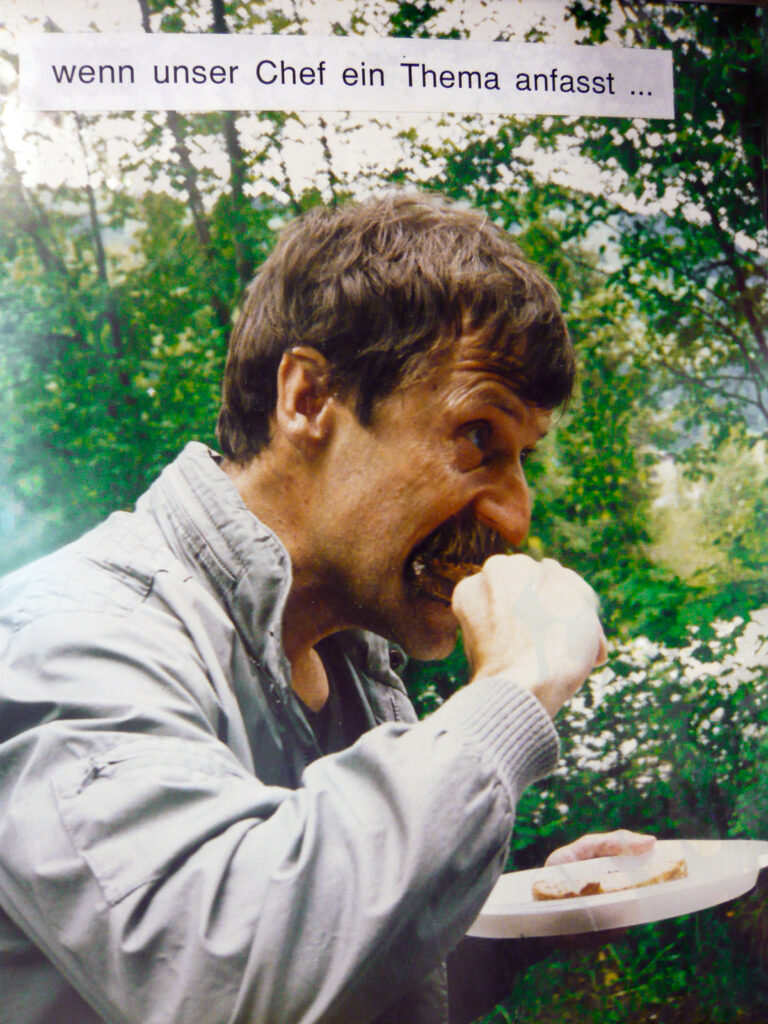
It is with profound sadness that the EMS learned of the passing of Andreas Engel. Andreas was a pioneering figure in structural biology and a co-founder of the Maurice E. Müller Institute for Structural Biology at the Biozentrum, University of Basel. With his passing, the structural biology and biophysics communities have lost one of their most visionary, innovative, and influential scientists.
Thoughtful obituaries and scientific tributes celebrating Andreas’s life and achievements can be found at the links below:
- https://www.biozentrum.unibas.ch/news/detail/obituary-for-prof-andreas-engel-1943-2026
- https://doi.org/10.1016/j.jsb.2026.108324
In addition, we invited a researcher who spent many years in Andreas’s laboratory to share a personal remembrance, offering a unique perspective on Andreas as both a scientist and a mentor.
This year, 2026, took Andreas Engel away but his spirit and driving force continue to inspire so many people today. As several members of the executive committee knew that I had spent many years in Andreas’s laboratory in Basel, I was kindly asked to write a few words about the man—whom I would describe as an unstoppable enthousiast. I will try to share here some memories I have of Res (this is how we called him). For my PhD defense in the nineties my doctoral supervisor, Alain Brisson wisely advised me to ask Andreas to be an external jury member, which he accepted without hesitation. This was the start of a long-lasting journey. Andreas helped me get grants and allowed me to join his group at the Maurice Müller Institute for High Resolution Electron Microscopy in the Biozentrum.
As a post-doc, life in Basel was very exciting. Andreas had a vision of bringing together the strengths and talents of different people. For instance, one of the research topic at the time was aquaporins; these membrane proteins were investigated using both Atomic Force Microscopy (AFM) and Transmission Electron Microscopy resulting in numerous publications thanks to these complementary methods.
Recalling some anecdotes, it was almost mandatory for a post-doc or visitor to follow Andreas in the “Rhein-schwimmen,” that is, swimming in the river during the lunch break on hot summer days. When going for hikes on Lab outings, Andreas always found shortcuts in the mountains, admittedly much longer, but offering many adventures. When he hired me in 2003, the position was part-time (80%), and he kindly asked my wife if my wages would be suitable, they were.
I thoroughly enjoyed working on mass measurements with the old Scanning Transmission Electron Microscope (STEM) that Andreas almost set up himself, this work involved collaboration with many people worldwide, including Vladislav Krzyzanek, our current EMS president. I was impressed by how Andreas explained and demonstrated how to exchange the Cold Field Emission Gun and align that microscope. We were convinced that he knew exactly how and where electrons travel in the microscopes!
He was confident and truly believed I could do it myself but luckily, I never had to. Andreas made everything possible and had such a remarkable vision for the laboratory’s development. He created the Center for Cellular Imaging and NanoAnalytics (C-CINA) moving microscopes across the Rhein River to a new location suitable for hosting the first Titan Krios 300 kV in Switzerland (2009). As he approached the age of official retirement at the Biozentrum, he helped Prof. Henning Stahlberg take over the leadership of this huge laboratory. But he was unstoppable and continued working and pursue his dreams in Cleveland (USA) and Utrecht (the Netherlands). When returning to Basel he not only founded a startup called « Cryo-writer » but also actively contributed to the establishment of a cryo-EM facility in the industry at Roche Pharma pRED during the difficult COVID times.
When listening to all the nice speeches from his family and relatives at his funeral ceremony last April 20th, other facets of this diamond that was Andreas were revealed to me. He was an amazing husband, father and grandfather, but also a jazz band banjo player, a great alpine soldier in the Swiss military, and a car lover and a skilled car mechanic.
Speeches from former PhD students like Wanda Kukulski and Dimitri Fotiadis, who are now lab heads in Bern (Switzerland), were particularly emotional. We all miss Andreas Engel and he will forever remain in the memory of the vast international network of people he built during his full and very busy life.
Philippe Ringler